High-Volume Manufacturing Strategies for Vehicle Components
High-Performance Plastic Injection Molding For Precision Automotive Parts
Plastic injection molding automotive parts is a manufacturing process where molten thermoplastic polymers are injected under high pressure into precision-machined steel molds to produce vehicle components. This method enables the high-volume production of complex geometries with tight tolerances, essential for parts ranging from interior trim panels to under-hood housings. The primary value lies in its ability to create lightweight, durable, and corrosion-resistant components while minimizing material waste and secondary assembly operations.
High-Volume Manufacturing Strategies for Vehicle Components
For plastic injection molding automotive parts, high-volume manufacturing strategies hinge on maximizing throughput while minimizing cycle time and material waste. This is achieved through multi-cavity tooling and hot runner systems that eliminate regrind, ensuring consistent part quality at scale. Implementing robust process automation for part extraction and in-line inspection drastically reduces human error and downtime. A key insight is that
tooling steel selection and precision cooling channel design are non-negotiable for sustaining millions of cycles without dimensional drift or warpage.
You must also standardize material grades and injection parameters across production cells to enforce repeatability, allowing for lean, just-in-time delivery schedules that directly support automotive assembly lines without buffer stock.
Optimizing Cycle Times for Tier-One Suppliers
For tier-one suppliers, optimizing cycle times for high-volume production directly impacts profitability and customer SLA adherence. This involves fine-tuning injection speeds and packing pressures to the exact plastic flow characteristics of the part, often using scientific molding principles to shave seconds off each shot. Simultaneously, implementing active cooling channel design with conformal cooling reduces heat extraction time without sacrificing part quality. A focused process control strategy ensures that faster cycles do not introduce flash or dimensional variation, maintaining the tight tolerances demanded by automotive OEMs. How can tier-one suppliers reduce cycle time without risking part warpage? By utilizing in-mold sensors to trigger ejection at the precise moment of sufficient rigidity, allowing the mold to run at the maximum safe performance threshold.
Automation Integration in Production Lines
When you’re ramping up production of plastic injection molded automotive parts, robotic part removal and handling is where automation really shines. Robots snatch hot parts right from the mold, trimming cycle times and keeping operators safe from heat and sharp edges. Conveyors then shuffle components to automated workstations for trimming or ultrasonic welding, all without human hands. You can even link automated vision inspection directly into the line, so every dash panel or door handle is checked mid-flow. This seamless integration keeps your line running at full speed, reducing defects and manual labor without slowing down your output.
Just-in-Time Delivery and Lean Inventory
In high-volume plastic injection molding for vehicle components, Just-in-Time (JIT) delivery synchronizes molded part shipments directly with the automaker’s assembly schedule, eliminating large warehousing. Lean inventory requires molding cells to produce only what is needed, using pull signals from downstream assembly. This demands precise sequencing of resin and tooling. A typical sequence includes:
- Confirming daily production orders from the OEM’s system
- Setting mold changeover schedules to match exact part mix
- Shipping molded components directly to the assembly line in reusable dunnage
Even a single overrun disrupts the entire supply rhythm, making process capability more critical than batch efficiency.
Material Selection for Performance and Durability
For automotive parts, material selection for performance and durability dictates the balance between impact resistance and thermal stability. Polypropylene with talc filling offers cost-effective stiffness for interior trim, while glass-filled nylon is mandatory underhood for sustained heat and chemical exposure.
The resin must match both the peak service temperature and the continuous load cycle, not just the static tensile strength.
Selecting a grade without adequate fatigue resistance guarantees premature cracking under vibration. Impact modifiers in polycarbonate/ABS blends prevent brittle failure in dashboards, but reduce modulus. A precise trade-off between elongation at break and flexural modulus plastic injection molding automotive parts defines long-term durability in a door handle or engine cover.
Engineering Resins for Under-the-Hood Applications
For under-the-hood applications, engineering resins must withstand continuous exposure to high thermal loads, aggressive fluids, and mechanical vibration. Polyamide 66 with glass-fiber reinforcement is commonly specified for air intake manifolds due to its high heat deflection temperature and resistance to oil and coolant. Polypothalamide (PPA) provides superior strength for transmission components subjected to peak operating temperatures above 200°C. For oil pans and timing chain guides, impact-modified polyamide 6 offers a balance of toughness and dimensional stability under cyclic stress. High-temperature polyester (PCT) is selected for sensor housings requiring long-term electrical insulation in hot oil environments. Proper mold design for these crystalline resins must account for anisotropic shrinkage to maintain sealing surfaces and threaded insert retention.
Engineering resins for under-the-hood applications provide thermal and chemical resistance through specific polymer grades, with glass-filled polyamides and PPA enabling durable, lightweight replacement of metal components in high-heat engine compartments.
Lightweight Alternatives to Metal Components
Replacing heavy steel or aluminum with high-performance engineering thermoplastics directly reduces vehicle mass while maintaining structural integrity. Glass-filled nylon and carbon-fiber-reinforced PEEK offer tensile strengths rivaling metal, yet slash component weight by up to 50%. For underhood brackets or transmission housings, these plastics eliminate corrosion concerns and dampen vibration better than metal. Polyetherimide (PEI) withstands continuous 170°C heat, making it viable for powertrain supports. The injection molding process consolidates multiple metal parts into a single, complex geometry, slashing assembly time. The result is a lighter, more fuel-efficient car without sacrificing durability. Choose reinforced polymers for engine mounts or pedal assemblies; they absorb impact and resist fatigue where metal would crack.
Recycled and Bio-Based Polymer Options
For automotive parts, recycled and bio-based polymer options now offer a direct path to performance-grade components. Post-industrial recycled (PIR) polypropylene, for instance, delivers the same impact resistance as virgin resin for interior trim and under-hood brackets. Bio-based nylons, derived from castor oil, provide superior heat resistance for engine bay connectors while reducing petroleum dependency. These materials often require adjusted processing parameters, such as lower melt temperatures or modified cooling cycles, to prevent degradation of the recycled content. A practical sequence for selection includes:
- Verify the recycled content percentage aligns with the part’s tensile strength requirements.
- Test bio-based resins for hydrolysis resistance in continuous moisture exposure.
- Confirm the supplier’s PCR (post-consumer recycled) sourcing is consistent for color stability.
Precision Tooling and Mold Design
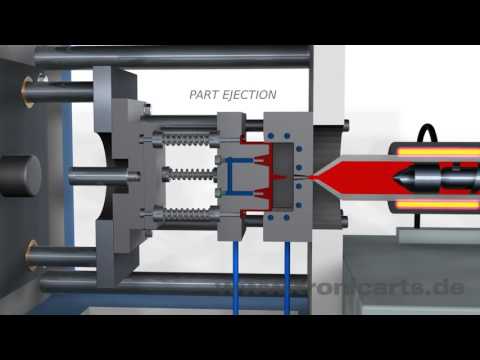
Precision tooling for automotive injection molding demands steel selection that withstands high-pressure cycles and abrasive glass-filled polymers. Mold design integrates conformal cooling channels, cut via additive manufacturing, to drastically reduce cycle times while eliminating warpage in complex geometries like engine bay brackets. The gate placement must be meticulously calculated to ensure balanced fill across thin-wall sections without visible knit lines. A single micron of mismatch on a core-cavity alignment can compromise the snap-fit tolerance of a dash panel assembly, making the tool’s closure system the difference between a seamless install and field failure. Ejector pin sequencing and surface texturing are also dialed in to prevent flash and match interior grain patterns.
Multi-Cavity Molds for Complex Geometries
For complex automotive geometries, **multi-cavity mold design** must balance intricate part shapes with balanced melt flow across all cavities. When molding a component like a multi-channel air intake manifold, designers incorporate conformal cooling channels and strategically placed gate locations to prevent warpage in each cavity simultaneously. Achieving uniform packing pressure and cycle time across cavities with dissimilar geometries requires advanced flow simulation and precision steel cutting. Multi-cavity molds for complex geometries often employ sliding cores and hot runner systems to manage undercuts and varying wall thicknesses without sacrificing cavity-to-cavity consistency.
Q: How do multi-cavity molds handle drastically different geometry profiles in one tool? A: They use individually tuned runner diameters and separate temperature control zones per cavity to compensate for geometry-driven flow resistance differences.
Hot Runner Systems for Consistent Quality
In precision tooling for automotive parts, hot runner systems ensure consistent quality by maintaining molten plastic at a uniform temperature from nozzle to cavity. This eliminates cold slugs and pressure drops that cause dimensional variation. For optimal performance, follow this sequence:
- Select valve-gated nozzles for balanced flow to each cavity.
- Use independent temperature zones for precise melt control.
- Employ sequential fill timing to eliminate weld lines and sink marks.
This direct thermal regulation produces repeatable, defect-free components like air intake manifolds and interior trim, reducing scrap and cycle time.
Conformal Cooling Channels to Reduce Warpage
In precision mold design for automotive parts, conformal cooling channels drastically reduce warpage by following the part’s exact geometry, unlike straight drilled lines. This uniform heat removal prevents uneven shrinkage in complex forms like dashboards or bumper brackets. The sequence is: first, 3D-printed inserts channel coolant along curved surfaces; second, consistent thermal profiles allow symmetrical crystallization; third, residual stress drops, eliminating post-mold distortion. Conformal cooling channels to reduce warpage enable tighter dimensional tolerances and faster cycle times, directly solving sink marks and bowing in structural components.
Quality Control and Testing Protocols
Quality control in plastic injection molding for automotive parts begins with in-process dimensional verification, using laser scanners or CMM to catch cavity wear or shrinkage drift before a single defective batch escapes. Each cycle’s melt temperature, injection pressure, and hold time are logged and compared against a PPAP-validated window, triggering instant automated rejects if deviations occur. Testing protocols then demand accelerated weather and thermal shock cycles—mimicking under-hood heat and salt spray—to expose micro-cracks or warpage invisible to the naked eye. A consistent 0.1% fill rate variance can silently create weak knit lines, so torque-to-failure tests on every 15th part validate structural integrity. No glossy surface passes without a glossmeter scan, ensuring airbag covers or dashboard trims match the vehicle’s tensile and aesthetic specs under every driving condition.
Dimensional Inspection Using Coordinate Measuring Machines
In plastic injection molding for automotive parts, dimensional inspection using CMMs translates digital CAD models into physical reality checks. The process begins with fixture-mounting the molded component onto the CMM granite table. Next, a touch-trigger or scanning probe traverses the part, collecting thousands of data points along critical features like bolt holes, sealing surfaces, and snap-fit geometries. The machine then compares these point clouds against nominal tolerances, automatically flagging deviations. For high-volume runs, operators sequence inspections:
- First, the CMM checks datums and gross warpage.
- Next, it evaluates tight-tolerance features like gear teeth or clip profiles.
- Finally, it generates a color-mapped deviation report for immediate process adjustments.
This ensures each complex geometric feature meets automotive-grade specifications before assembly.
Mechanical Property Validation for Safety Parts
For safety-critical automotive components like airbag housings or brake pedal brackets, mechanical property validation for safety parts must proceed beyond standard tensile testing. You will validate impact resistance via notched Izod tests on molded specimens, confirming fracture toughness under high strain rates. Fatigue testing on actual parts, using sinusoidal loading cycles, ensures the plastic endures repeated stress without cracking. Creep testing at elevated temperatures (typically 80°C) verifies dimensional stability under sustained load. Each validation must correlate directly to the part’s specific failure mode, such as ductile-to-brittle transition for steering column shrouds. Real-world results from these tests feed directly into the mold flow simulation’s structural analysis.
Surface Finish Standards for Interior Trim
For interior trim, surface finish standards like the SPI (Society of Plastics Industry) grades are your go-to guide. A smooth, gloss finish (SPI A-1) is common for visible dashboards, while a textured matte finish (SPI C-3) helps hide fingerprints on door handles. Matching the texture grain from the mold to the customer’s master plaque is often trickier than the gloss level itself. You’ll typically spec a standardized gloss meter reading (e.g., 60-degree gloss units) for each part cavity to ensure consistency. Below is a quick reference for common trim finishes:
| SPI Grade | Typical Use | Surface Texture |
|---|---|---|
| A-1 | High-visibility trim | Mirror gloss |
| C-3 | Grab handles, vents | Matted, low glare |
| D-3 | Hidden clips | Rough, no polish |
Cost-Efficiency Through Process Optimization
In plastic injection molding for automotive parts, cost-efficiency through process optimization is achieved by minimizing cycle times and material waste without compromising part integrity. By precisely tuning parameters like melt temperature, injection speed, and hold pressure, you reduce scrap rates and energy consumption per shot. Implementing real-time cavity pressure sensors allows for adaptive process control, preventing defects such as warpage or short shots that drive up rework costs.
This proactive approach eliminates costly post-mold inspections and secondary operations, directly lowering per-part manufacturing expenses.
Optimizing cooling channel design further cuts cycle times, maximizing machine utilization and throughput while reducing tooling wear and maintenance overhead.
Reducing Scrap Rates via Simulation Software
Simulation software directly attacks scrap rates by enabling virtual validation of mold filling, cooling, and warpage before steel is cut. For automotive parts, predictive analysis of weld line placement and air traps allows engineers to adjust gate locations or venting in the digital model, eliminating physical trial-and-error runs. This prevents short shots and cosmetic defects that generate scrap in high-cavitation tools. By iterating process parameters like injection speed and pack pressure within the simulation, molders achieve first-shot approval, slashing material waste from rejected parts. Every simulation-driven correction reduces the thousands of pounds of polymer typically lost to sink marks or flash during production ramp-up.
Energy-Efficient Machinery and Hydraulics
Upgrading to servo-driven hydraulic systems in automotive part molding cuts energy consumption by up to 70% compared to fixed-displacement pumps, as the motor only draws power during actual machine movement. These systems decouple the electric motor from the hydraulic pump, eliminating continuous idle waste. For complex, high-tonnage automotive components like bumpers or instrument panels, retrofitting with variable-speed pumps reduces oil heating and cooling loads, directly lowering kWh per cycle. Peak power demands drop significantly when accumulator-assisted hydraulics supplement the pump during injection phases.
Q: Do energy-efficient hydraulics compromise cycle speed for thick-walled automotive parts?
A: No—modern servo valves and digital pump controls maintain precise flow and pressure profiles, often improving repeatability while using less energy.

Secondary Operations Minimization Techniques
In automotive injection molding, part consolidation directly eliminates secondary operations by designing complex geometries with snap-fits, living hinges, and molded threads, removing the need for separate assembly or fasteners. Using multi-cavity tooling with hot runner systems produces parts with zero flash, bypassing deflashing steps. Self-gating molds and pick-and-place robotics for insert molding further minimize post-mold trimming and manual handling. These techniques reduce cycle times and labor costs while ensuring critical dimensional tolerances are held in the mold, not through secondary machining.
Emerging Trends in Automotive Manufacturing
The automotive sector’s shift toward lightweighting and complex geometries is directly reshaping plastic injection molding, with multi-material overmolding emerging as a critical process for integrating soft-touch surfaces onto rigid structural components. Simultaneously, in-mold electronics (IME) now allow manufacturers to embed capacitive touch sensors and lighting circuits directly into decorative trim parts during a single mold cycle. This trend eliminates secondary assembly steps for dashboards and control panels, reducing part weight and assembly complexity. However, achieving consistent adhesion between dissimilar polymers in high-volume production still demands precise thermal control and advanced surface preparation techniques. Molders are increasingly adopting gas-assist and water-assist injection methods to create hollow, ribbed structures in bumper beams and pedal brackets, further reducing material usage without compromising impact resistance.
Integrated Sensor Housings for Smart Features
Integrated sensor housings for smart features are molded with precision pockets and mounting bosses to secure LIDAR, cameras, and ultrasonic units. These smart feature sensor housings require multi-cavity tooling for complex geometries that align optical paths without distortion. Glass-filled nylon or LCP is used for dimensional stability under thermal cycling, while insert molding incorporates metal threads directly into the plastic structure. Overmolding with soft TPE creates watertight seals around electrical connectors. The part design avoids sharp radii to prevent stress cracking near vibration-prone sensor mounts.
Multi-Material Overmolding for Enhanced Functionality

Multi-material overmolding enhances automotive part functionality by integrating distinct polymers into a single component during a sequential injection process. A rigid substrate, such as glass-filled nylon for structural integrity, is first molded, then a second, softer material like thermoplastic elastomer (TPE) is injected over it to form a permanent chemical bond. This eliminates secondary assembly for features like vibration-damping grips, sealed perimeters, or living hinges. Multi-material overmolding for enhanced functionality enables designers to embed tactile soft-touch surfaces on control knobs or create dual-durometer seals that resist moisture ingress without adhesives. Process parameters—melt temperatures and cooling rates—must be precisely controlled to prevent delamination at the material interface.
| Aspect | Single-Material Molding | Multi-Material Overmolding |
|---|---|---|
| Seal integrity | Requires separate gasket | Integrated TPE seal |
| Grip improvement | Texture added post-mold | Soft-touch layer molded in situ |
| Assembly steps | Multiple parts join needed | Single molded unit |
Additive Manufacturing of Prototype Tool Inserts
Additive manufacturing of prototype tool inserts accelerates automotive part validation by directly printing conformal cooling channels into the insert, slashing cycle times and reducing warpage. These inserts, typically from maraging steel or aluminum alloys, allow engineers to test complex geometries—like lattice structures for weight reduction—before committing to hardened production tooling. Laser powder bed fusion or binder jetting enables rapid iteration on gate placement and venting, optimizing fill patterns for high-performance polymers like glass-filled nylon. This shortens development loops from weeks to days, delivering functional prototypes that mimic production behavior.
Additive manufacturing of prototype tool inserts enables rapid, cost-effective validation of complex injection mold designs with conformal cooling and iterative geometry optimization.
Regulatory Compliance and Surface Treatments
In plastic injection molding for automotive parts, regulatory compliance hinges on surface treatments that meet strict interior and exterior standards. For cockpit components, a UV-resistant texture like a fine matte finish prevents glare and degradation, directly satisfying OEM gloss-level specs. Engine bay parts often require a chemical-resistant coating or a specialized mold texture to avoid cracking from coolant or oil exposure.
The treatment must be approved for the specific plastic grade—polypropylene won’t bond with paints meant for ABS.
Metal plating on decorative trim must pass rigorous salt-spray and thermal cycle tests to avoid flaking. Choosing the wrong texture or coating, like a smooth finish on a dashboard, automatically fails regulation and risks delamination under heat. Always verify the treatment’s adhesion data against your resin’s data sheet first.
Meeting FMVSS Flammability Standards
Meeting FMVSS Flammability Standards requires selecting resin grades with intrinsic flame retardancy or incorporating halogen-free additives during injection molding. Parts must pass the stringent horizontal burn rate test (FMVSS 302), which demands consistent material dispersion and uniform wall thickness to prevent hot spots. Precise process control of melt temperature and cooling rates is critical to avoid degrading flame-retardant properties. Even minor deviations in dosing can render a compliant batch non-conforming. Mold surface treatments like plating or texturing must not compromise the flame barrier; thus, validation through third-party testing of finished parts is mandatory before production approval.
Paint-Free Textured Finishes for Exterior Panels
Paint-free textured finishes for exterior panels rely on precision-engraved mold cavities to impart a grain or pattern directly onto the plastic surface during injection molding. This process eliminates secondary painting operations, reducing volatile organic compound emissions and per-unit cycle time. The selected texture must mask flow lines and sink marks while maintaining consistent gloss levels across complex geometries. Tool steel hardness and surface polish dictate the texture’s longevity and repeatability across production runs. Mold surface engineering directly determines the final aesthetic and durability for unpainted exterior panels, requiring careful coordination between texture depth and polymer shrinkage.
Paint-free textured finishes for exterior panels utilize precision mold textures to replace paint, offering consistent aesthetics and lowered processing complexity in injection molded automotive parts.
EMI Shielding in Electronic Enclosures
EMI shielding in automotive electronic enclosures transforms standard plastic injection molded parts into barriers against electromagnetic interference. For control units and sensors, applying a conductive coating—such as zinc arc spray, electroless copper plating, or conductive paint—creates a Faraday cage effect directly on the enclosure’s interior. The process typically involves:
- Molding the ABS or PC/ABS housing with smooth internal surfaces for optimal adhesion.
- Applying a base layer of copper for high-frequency attenuation, followed by a nickel topcoat for oxidation resistance.
- Verifying conductivity below 0.1 ohm per square inch to ensure signal integrity protection in dense ECU bays.
This method eliminates bulky metal casings while meeting strict automotive performance demands.
Understanding the Core of Injection Molded Car Components
What Exactly Are These Molded Parts and Where Do You Find Them?
Key Material Choices That Determine Part Performance
How the Precision Molding Process Delivers Durable Auto Parts
From Molten Resin to Finished Bumper: The Step-by-Step Cycle
Critical Factors That Control Strength, Shrinkage, and Surface Finish
Selecting the Right Mold Design for Your Specific Automotive Application
Single-Cavity vs. Multi-Cavity Molds: Which Fits Your Volume Needs?
How Gate Placement and Cooling Channels Affect Part Quality
Key Performance Benefits You Get From Injection Molded Vehicle Components
Why Weight Reduction Without Sacrificing Impact Resistance Matters
How Complex Geometries and Tight Tolerances Are Achieved Reliably
Practical Tips for Optimizing Your Molded Part Design
Draft Angles, Wall Thickness, and Ribs: Avoiding Common Defects
Reducing Cycle Time While Maintaining Dimensional Stability
Common Performance Questions About These Molding Techniques
How to Prevent Warping or Sink Marks in Large Panel Parts
Can You Achieve a Textured or Glossy Finish Straight From the Mold?